
Aruba is famously known as One Happy Island due to its sun-drenched beaches, friendly locals, and a landscape that feels like a perpetual postcard. While many tourists spend their vacation relaxing on luxury resorts, the true rugged beauty and hidden treasures of the island lie just beyond the hotel zone.
To truly experience the island, you need the freedom that only a rental car can provide. Renting a car in Aruba is a straightforward process, but it requires a bit of local insight to navigate successfully. By understanding the nuances of the local road culture and following a few practical tips, you can transform your vacation into a fun exploration of everything this unique island has to offer.
Driving in Aruba is not merely a convenience; it is a gateway to the soul of the island. From the pastel-coloured Dutch architecture of Oranjestad to the windswept limestone cliffs of the north coast, having your own vehicle allows you to set your own pace and escape the crowded tour buses. This guide will provide you with the essential knowledge needed to drive around the island like a local, ensuring your journey is smooth and hassle-free.
The first thing international drivers need to know is that traffic in Aruba moves on the right side of the road. While this is familiar to many travellers, the local driving culture has unwritten rules that differ from those in other countries. For example, you can use the car horn to communicate with other drivers. A quick, light tap is a way to say “thank you” if someone lets you pass in front of them.
Another thing that you should strictly observe is the speed limit. In Aruba, all speed limits are posted in kilometres per hour. If you are used to miles, it is easy to accidentally speed. In built-up urban areas and residential zones, the limit is typically 30 km/h. On the open roads connecting the main towns, the limit increases to 60 km/h. Meanwhile, the main highway, which runs from the airport toward the hotel district, allows for speeds up to 80 km/h. Law enforcement does monitor these limits, so it is wise to keep a close eye on your speedometer to avoid any penalties from the local police.
One of the most distinctive features of driving in Aruba is the prevalence of roundabouts. In recent years, the island has replaced many of its traditional traffic lights with modern circular junctions to keep traffic flowing efficiently. You must remember that vehicles already inside the roundabout always have the right of way. Before entering, you must yield to any traffic coming from your left. This system significantly reduces wait times at intersections, but it requires focus, especially during peak hours.
A common mistake made by tourists is attempting to turn right on a red light. In many countries, this is a standard legal manoeuvre, but in Aruba, it is strictly prohibited unless there is a specific sign or a dedicated filter lane with a green arrow indicating otherwise. Failing to stop and wait for the green light can lead to a fine or, worse, a collision with oncoming traffic that is not expecting you to pull out. Patience is key at intersections; wait for the light to change fully before proceeding with your turn.
Understanding road priority is also vital for safety. While major intersections are well-marked, smaller junctions often rely on the priority road system. Look for a yellow diamond-shaped sign, which signifies that you are on a priority road and have the right of way. Conversely, if you see an upside-down triangle, which is the yield sign, or a standard stop sign, you must give way to all cross-traffic. In the absence of any signs at a four-way junction, the general rule is that traffic coming from the right has priority, though it is always safer to proceed with caution.
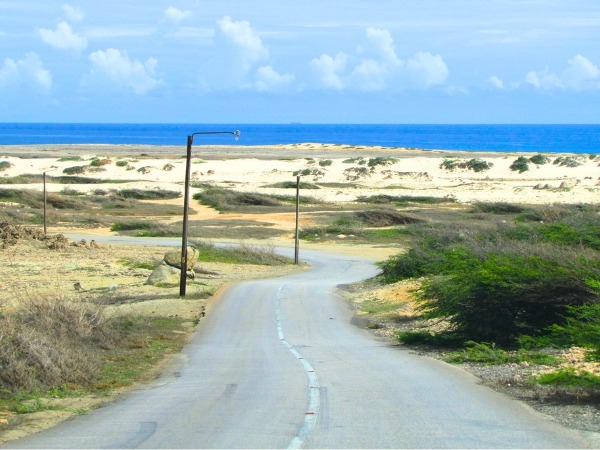
As you move away from the urban centres, you will likely encounter Aruba’s roaming animals. Goats, donkeys, and large iguanas are frequently seen wandering near or across the roads, particularly in the eastern part of the island. These animals have no fear of cars and will often stand in the middle of the road expecting you to wait. It is essential to stay vigilant, especially when driving through the countryside or near the entrance to the national park, as hitting an animal can cause significant damage to your vehicle and harm the local wildlife population.
The weather in Aruba is fairly consistent, but the occasional tropical shower can create hazardous driving conditions. Because it rarely rains heavily, oil, dust, and fine sand accumulate on the asphalt. When the first few drops of rain fall, they mix with these elements to create a surface that is as slick as ice. If you find yourself driving during a sudden downpour, reduce your speed immediately and increase your following distance. The roads dry quickly once the sun returns, but those first ten minutes of rain are the most dangerous.
Parking on the island is generally easy to find. While you can park for free at your resort and at most public beaches, the capital city of Oranjestad has implemented a modern metered parking system known as Aruba Pagatinu. Look for the white and yellow numbered parking spaces. If you are in a zone with these markings, you must pay at a nearby kiosk. Additionally, be very careful not to park near yellow lines on the curb. These indicate a no-parking zone, and the authorities are very quick to tow vehicles or apply wheel clamps to those in violation.
Most gas stations in Aruba are full-service, making the refuelling process easy. They employ attendants who will pump the fuel for you. You simply need to pull up to the pump, tell the attendant how much fuel you need or ask them to fill the tank, and they will handle the rest. It is customary to give a tip, especially if the attendant provides other services like cleaning your car window. If you happen to visit a station that is self-service, particularly after hours, you are usually required to pay the cashier inside before the pump can dispense fuel.
A bit of local natural knowledge can serve as a free guide for your trip. The Fofoti trees are shaped by the constant trade winds that blow across the island from the northeast. As a result, these iconic trees almost always lean toward the west. If you ever find yourself disoriented on a backroad without a signal, look at the tilt of the trees. They will point you toward the western coast, where the major hotels and the calmest waters are located, helping you regain your bearings in a pinch.

Driving in Aruba offers a level of independence that truly enriches your Caribbean experience. By stepping behind the wheel, you transition from a mere spectator to an active explorer, capable of finding those quiet moments of beauty that define the island. Whether it is a sunrise drive to the rugged northern point or a sunset cruise along the southern mangroves, the ability to navigate at your own whim is the ultimate luxury.
While the roundabouts and local wildlife require a bit of extra attention, the overall ease of navigating the island makes it less taxing for tourists. By following these practical tips, you will find that driving in Aruba is not only simple but also incredibly rewarding. The island is small enough to explore in a few days but diverse enough to keep you discovering new spots for weeks.
Do not leave your island exploration to chance or the schedule of a tour operator. Take the first step toward your exciting Caribbean adventure. Rent a car from Final Rentals today and experience the unparalleled freedom of driving around Aruba, where every turn in the road leads to an authentic expedition.